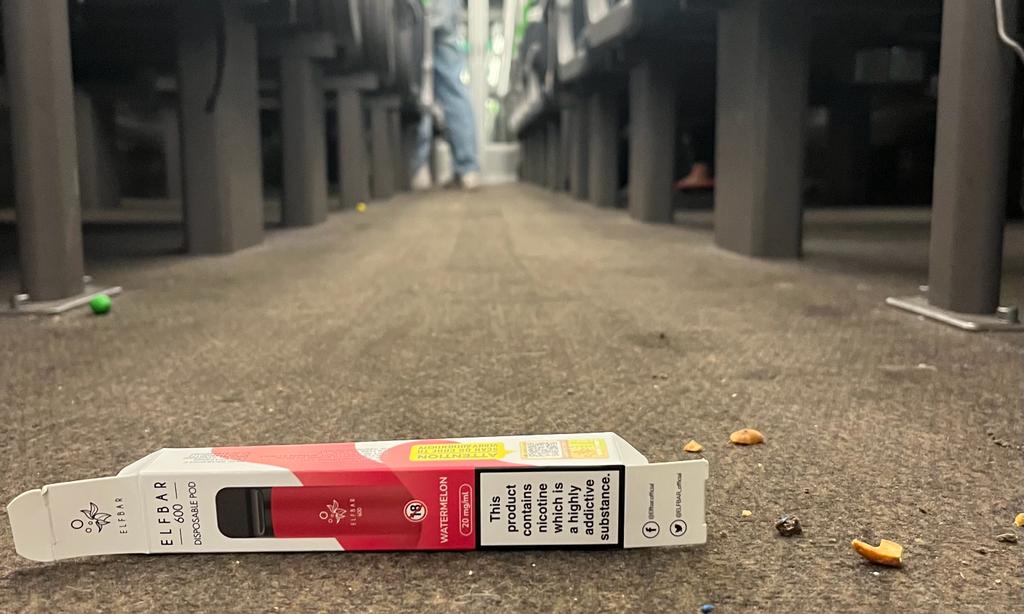
Vaping has exploded in recent years; in 2011, there were only 7 million regular vapers globally and this expanded to 68 million in 2020- according to US’ National Institute on Drug Abuse. Moreover, in recent years the proliferation of disposable vaping has made it more accessible. This may be considered good for those who wish to stop smoking, but it may also mean that vaping is more available for those who should not be vaping- namely under 18s.
Because of this, many have deemed the UK to be in a vaping epidemic– it’s quite the thought. This has meant that the potential for state regulation of vaping has received increasing mainstream political attention. This has covered debates over the existence of disposable vapes and debates over vaping advertising. For example, in July 2023, the Local Government Association called for a ban on disposable vapes by 2024. Additionally, in May 2023, the George Institute, an independent medical research firm, called for a ban on all vaping advertising.
The dilemma in vaping advertising
In principle, there are two concerns about vaping adverts:
A-Certain themes in vaping advertising may promote underage vaping.
The Action on Smoking and Health group produced a fact sheet on vaping in 2023. This noted that in 2023, 20.5% of those under 18 have vaped in the UK- this represents an increase from 13.9% in 2020. Moreover, among 16-17 year-olds in the UK, 15% vape. While this can be attributed to other factors, the importance of advertising in increasing exposure is evident. For instance, only 1/5 of those under 18 in the UK have never seen a vape promoted or advertised.
B-Current vaping adverts can misinform people.
There are significant misconceptions over the nature of vaping. For example, in 2021, a survey of adult smokers found that only 34% accurately believed that vaping was less harmful than smoking. Additionally, only 11% accurately knew that none of the risks associated with smoking were associated with nicotine. In this sense, vaping ads are not informing individuals properly about vaping. This is all important as misconceptions about the risks of vaping may potentially reduce vaping’s most important public health role in promoting smoking cessation.
In effect, these two concerns over vaping elucidate a practical dilemma about vaping: how does the state regulate vaping ads to stop children from vaping while also informing adults of vaping’s benefits in smoking cessation? To further this point, both issues are underlined by a moral concern with autonomy.
On point A), we are concerned with underage vaping because those under 18 are not autonomous. This is because they do not possess the level of mental capacity to be autonomous. In the same way, legally, teenagers cannot drink or gamble until they are 18.
Additionally, on point B), this matters to us as the ability to make informed choices is an important aspect of autonomy. For example, if a travel company offered you a room in a luxury hotel, but you ended up in a Fawlty Towers-esque bed and breakfast. In this scenario, you were not autonomous as you were misinformed; the very same could be said about vaping advertising.
Policy solutions
What have policymakers proposed to fix this conundrum then?
In 2022, Dr Javed Khan conducted a review into the potential for the UK to go smoke-free. In this review, he made some recommendations on vaping advertising. These included the banning of cartoons in vaping adverts to appeal to young people and changing the way vape flavours are marketed so they do not appeal to young people. The review and these recommendations were endorsed by UK Prime Minister, Rishi Sunak.
The Think Tank Demos also produced a prospective white paper on state regulation of vaping. This involved some proposals about the state of advertising. For example, Demos contended that the state should expand public information campaigns to promote vaping and dissuade smoking. Additionally, the state should reform advertising regulations so that the Government can place positive messages about vaping on TV, online and pack advertising.
Moreover, as mentioned prior, the George Institute has proposed a full ban on vaping advertising. Contrastingly, the Labour Party has offered an interesting proposal to ban vaping advertising before 9 pm. In this sense, there would be no vaping ads before the TV watershed, this would protect young people from exposure- in theory.
What now?
In essence, while there are plenty of proposed policy solutions, a combination of these policies may be best to address the moral and practical dilemma that has been outlined. In this sense, how the state chooses to regulate vaping advertising will indicate how we value individual autonomy. In particular, whose autonomy matters and what type of individual autonomy matters?
Additionally, another dimension is the fact that autonomy may be used to argue against state regulation of vaping advertising.
To illustrate this point, we can appeal to Philosopher Thomas Scanlon’s article on the ‘Theory of Freedom of Expression’. Scanlon contends that autonomy requires that individuals have control over how they form their beliefs; this should not be hampered or influenced by external factors. Only then are individuals truly autonomous. For example, you would not consider yourself autonomous if someone was influencing or shaping your religious and political beliefs. In this regard, you might not consider yourself autonomous if the state influenced your beliefs on smoking cessation and vaping by regulating vaping advertising and/or releasing public information campaigns on the benefits of vaping.
Also, some may argue that vaping advertising does not misinform individuals as much as policymakers or this blog makes out. This may raise some doubt about whether the state should intervene in vaping advertising entirely.
Ultimately, this brings us back to our initial dilemma: what should policymakers do about vaping advertising. Maybe this entire blog and exercise was useless then? You might agree with that and believe that exercises in morals like this just delay decisions and policy. Well, if policymakers are to make coherent and effective policies over vaping advertising- should it be banned, reduced, regulated, or left alone- they need to be transparent about the moral principles and moral dilemmas at stake. Hopefully, this blog has offered a (small) contribution to help elucidate the very moral issues at stake in the debate over vaping advertising.
 Mores
Mores 
Leave a comment